

Are Ray-Ban Meta Smart Glasses Paving the Way for an AI Eyewear Revolution?
H
Find Your True Space
Search for a command to run...
Find Your True Space
No comments yet. Be the first to comment.
In today’s fast-paced digital world, businesses are expected to operate faster, smarter, and more efficiently than ever before. From reducing human error to streamlining workflows, automation has become the backbone of modern enterprises. As we move ...

In 2025, the difference between brands that thrive and those that merely survive comes down to one essential factor—who builds your technology. And no, we’re not talking about hiring a freelance developer or buying a plug-and-play solution. We’re tal...

Launching your website or app is just the beginning. While development gets you online, it’s digital marketing that gets you noticed, trusted, and chosen. At HowinCloud, we believe that launching a platform is step one—growing it is the real mission....

In today’s digital world, your website is often the first interaction a potential customer has with your brand. But a good-looking website alone isn’t enough—it needs to convert. That means turning visitors into leads, customers, or subscribers. If y...

In today’s fast-paced digital world, Point of Sale (POS) systems are more than just billing tools — they are the backbone of operations for many businesses. From tracking inventory to managing customer relationships, the right POS system can make or ...

In a Remarkable Return, Smart Glasses Take Center Stage: Mark Zuckerberg Reveals the Cutting-Edge Ray-Ban Meta Smart Glasses at Meta Connect Event"
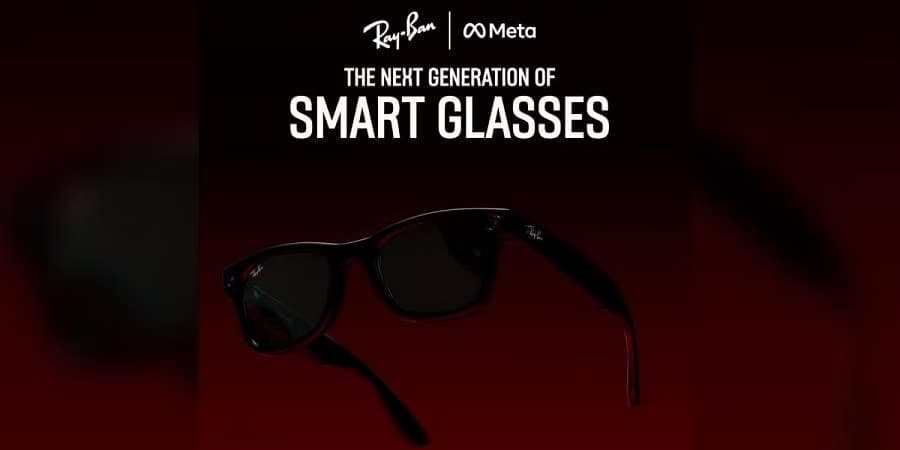
Mark Zuckerberg recently stole the spotlight once again as he unveiled the next-gen Ray-Ban Meta Smart Glasses during the Meta Connect event, hosted at their headquarters in Menlo Park, California. This highly anticipated announcement marks exactly two years since the release of the first-generation Ray-Ban Stories, which, in comparison, fell short of the advanced capabilities showcased by the new and improved glasses.
Utilizing Multiple Modes through Eyewear
Available in an array of stylish designs and a spectrum of vibrant colors from Ray-Ban, these smart glasses offer a wide range of functionalities. They enable users to make calls, enjoy music, capture photos and videos, and even live-stream their experiences. Mark Zuckerberg highlighted the groundbreaking aspect of these smart glasses, stating, "These are the first smart glasses that come pre-loaded with Meta AI, enabling hands-free interaction wherever you are." By simply uttering the phrase, 'Hey Meta,' users can initiate interactions with the device and even take control of various features. Additionally, with an upcoming free software update, these glasses will become "multimodal," although initially, this feature will be available as a beta release in the United States.
Meta has placed significant emphasis on the user-friendly operation of these glasses, aiming to eliminate the constraints posed by handheld cameras and smartphones. The integration of Meta AI into the device sets them apart from other tech giants exploring similar ventures. Speculation sparked when Sam Altman met with Jony Ive, hinting at the possibility of Apple developing hardware with ChatGPT capabilities. More details on this front may be unveiled during the upcoming OpenAI Devday.
Microsoft has also been rumored to be working on smart glasses with GPT-4V image recognition, adding to the competitive landscape.
Earlier this year, Meta disclosed its AR/VR hardware roadmap to its employees, outlining plans for the third generation of smart glasses in 2025. These glasses are expected to feature a viewfinder for tasks such as reading messages and scanning QR codes, along with a neural interface band for controlling the glasses through hand gestures.
In the realm of VR, Meta has surged ahead with the recent launch of the Quest 3 mixed reality headsets, placing them slightly ahead of Apple's anticipated Vision Pro release next year.
The recent surge in interest around integrating AI into hardware is indeed gaining momentum, but it's worth noting that a major player, Google, had already ventured into this field a decade ago. In 2013, Google introduced Google Glass, which was arguably ahead of its time. Due to uncertainty regarding its product-market fit and concerns over privacy, Google Glass was discontinued in 2015. However, Google's interest in this domain persisted. In 2020, the company acquired the Canadian smart glass maker North Inc, but there have been no notable developments since then.
Meta, formerly known as Facebook, entered the smart glasses market in 2021 with the release of Ray-Ban Stories, their first-generation smart glasses. These glasses offered multiple capabilities, including answering calls and capturing photos and videos, among others. However, user adoption statistics paint a less rosy picture. Out of the 300,000 units sold between September 2021 and February 2023, only 9% (around 27,000) are still in use.
The reaction to Meta's latest announcement has been mixed. Some have raised concerns about privacy, while others have praised the offering. A Hacker News user highlighted the competitive pricing as a significant advantage. The latest Meta Wayfarer model, priced at $299, is only $128 more than the regular Wayfarer, which sells for $171. This additional cost provides a sunglass with integrated features like a camera, headphones, and more.